Don’t Chase Universities. Build a Profile They Can’t Ignore.

Serious institutions pause when they see clarity, responsibility, and intellectual honesty. 
Remember—your real work is not chasing acceptance,
but making your dream worthy and actionable,
regardless of who accepts you or not.
That is your real charisma.

Most students use rankings as a filter. Very few ever see a mathematical method that aligns their profile to what those rankings actually represent.

How we objectively map You to the right Universities

You don’t choose universities hoping they will change you; you choose environments where the version of you already taking shape can fully exist.There is no such thing as the best university—only the university that is mathematically and intellectually best for you

The U in You™ approaches shortlisting not as aspiration, but as an equation: a mapping between how you think, learn, research, collaborate, and persist—and the ecosystems that can actually sustain that growth. Instead of relying on rankings, we analyse variables that quietly shape outcomes: how a university’s academic culture rewards depth versus breadth, the nature of its digital archives and research access, the seriousness of its clubs and labs, the way conversations happen in classrooms, corridors, and mentorship spaces, and even how curiosity is encouraged outside formal syllabi. Each factor is weighed against your demonstrated patterns—not claimed interests, but lived behaviour. When these variables align, the match is not emotional or accidental; it is statistically and psychologically coherent. That is why the process doesn’t end with a list—it ends with clarity. 


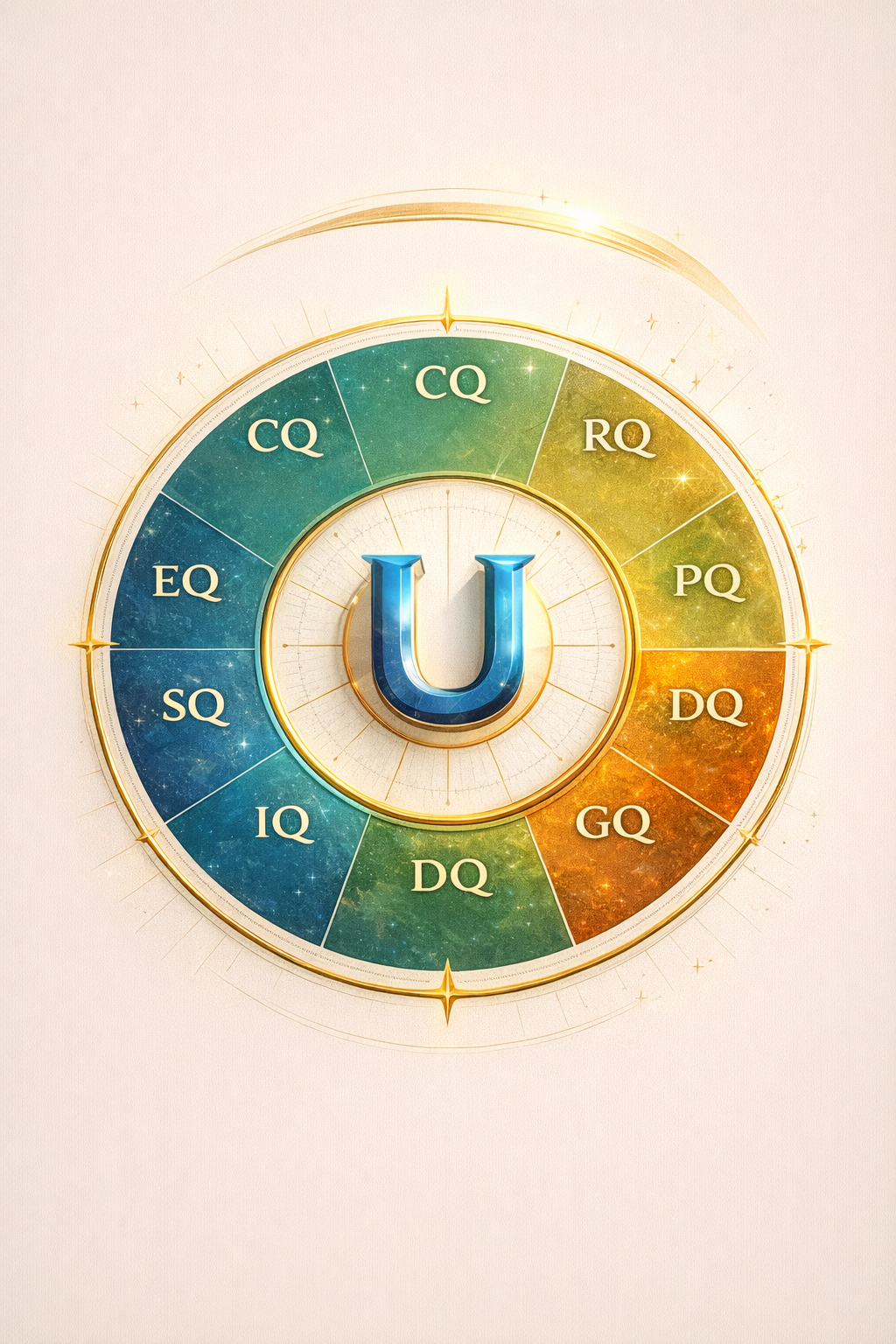
Have you analysed your U-Quotient wheel?

The U-Quotient Wheel™ is a psychological map of growth, not a test and not a scorecard.
It visualises how a learner’s mind, behaviour, and identity evolve together over time—and why strong profiles feel coherent rather than crowded. At the centre of the wheel is the U — your authentic self.
Every quotient is a spoke. When one is weak, growth wobbles. When they develop together, the profile gains balance, direction, and memorability.

The U (Universe) in You™

College profiling in the most authentic way through identity, behaviour, and depth

In a world where admission officers read hundreds of applications in minutes, The U in You™ is not a checklist-driven counselling program—it is a psychological decoding of who you truly are and how your mind naturally thinks, acts, commits, and grows. This program works at the intersection of identity, cognition, behaviour, and long-term consistency, helping students move away from performative profiles toward authentic evidence of becoming. Instead of asking “What should I do to impress colleges?”, we ask a far more powerful question: “What kind of thinker, builder, and contributor are you becoming—repeatedly, over time?”
What makes The U in You™ radically different is that passion is not treated as an interest—it is treated as a behavioural pattern. Through carefully scaffolded, real-world passion projects (from financial literacy ecosystems and microfinance courses, to research papers, social initiatives, design-thinking maps, leadership labs, media series, and entrepreneurial simulations), students don’t claim impact—they live it, test it, refine it, and reflect on it. Nothing is fabricated. Nothing is rushed. Every project quietly answers what universities never ask directly but always look for: Can this student identify a gap, stay with it, build depth, and grow others through it?
The U in You™ is for students who want their profile to feel inevitable, not manufactured—where essays, recommendations, interviews, and activities all point to the same inner compass. This page is not about telling you everything. It’s about inviting you to experience a form of college counselling that aligns your mind, motivation, and meaning—so your application stops trying to stand out, and starts making sense.
If you’re ready to build a profile that reflects who you are becoming, not just where you’re applying—this is where your journey begins.

What makes 

The U in You™ different

1. Profile as Cognition
The U in You™ begins with a simple but rarely asked question: How does your mind naturally work when no one is watching?
Instead of stacking activities, we map patterns—how you notice problems, stay with ideas, respond to difficulty, and return to what matters. What emerges is not a résumé, but a coherent cognitive signature that quietly repeats across essays, projects, interviews, and recommendations. 

2. Depth over Display
Universities do not remember volume; they remember clarity.
Every experience within The U in You™ is filtered through one lens: Does this deepen who you are becoming, or merely decorate your profile? Students learn to invest in fewer things—longer, better, and with intention—so that when an application is read quickly, its internal logic is instantly visible

3. Consistency as Evidence
In this program, consistency is not discipline—it is psychological alignment.
When your interests, actions, reflections, and outputs come from the same inner “why,” they begin to reinforce each other naturally. Admissions officers may not name this quality, but they recognise it immediately: a student whose growth feels inevitable, not engineered. 

4. Passion Projects as your Mouthpiece
The U in You™ does not ask students to talk about impact. It guides them to build, test, document, and refine real initiatives—academic, social, entrepreneurial, or research-led—where thinking turns into contribution. These projects are not templates; they are mirrors. Each one reveals how a student thinks when faced with ambiguity, responsibility, and scale. 5. The Quiet Art of being Remembered
Applications are read fast. Memory is selective.
The U in You™ trains students to communicate in ways that respect this reality—by shaping narratives that are internally consistent, emotionally grounded, and intellectually honest. The result is not exaggeration, but recognition: the sense that “this student stayed with me.” 

6. Reflection 
What truly separates strong profiles from exceptional ones is awareness. Students in The U in You™ learn to reflect with precision—connecting outcomes back to assumptions, growth back to struggle, and ambition back to values. This reflective maturity quietly signals readiness for university life beyond admission.


The Sigma Sauce: Where IB Becomes a Coherent Profile ∑

The IB is not a set of disconnected requirements—it is a system, and the Sigma Sauce is what brings it together. When EE builds intellectual depth, IAs add subject texture, CAS injects action and creativity, and TOK trains the mind to question across perspectives, something powerful happens: learning stops being fragmented. The personal statement and supplemental essays then become the final reduction—not a summary, but a synthesis. The real optimisation lies in balance. No single component dominates; each reinforces the other. When reflection, curiosity, and consistency are mixed deliberately, the Sigma Sauce stops being a metaphor and becomes a learner’s recipe for self-coherence, clarity, and long-term credibility.

Before the College List: Decode the PrQ (Profile Quotient) Before rankings, before destinations, before shortlists—there is PrQ. Every meaningful college decision must be preceded by an honest analysis of who you are as a learner, thinker, and contributor. When students skip this step, they follow the crowd; when they engage with it, they choose with precision. PrQ is not about prestige—it is about fit

The Moment you stop trying to stand out 

At a certain point in a serious learner’s journey, something becomes clear: universities don’t remember the busiest profiles—they remember the most coherent ones. Students who stand out are not louder or more decorated; they are consistent in how they think, choose, and grow. Their interests recur with purpose. Their commitments survive difficulty. Their work reflects intent rather than display. The U in You™ is designed for that turning point—when students move from performing for attention to understanding their own cognitive patterns. When clarity replaces performance, a profile stops competing on volume and begins communicating direction. And direction, not noise, is what stays with an admission reader long after the file is closed.

🦅 Eaglian vs 🦘 Kangarooian 

A Psychology Lens on College Profiles 

In an admission officer’s world, time is compressed.

Applications are read fast. Memory is selective. That’s where two very different profile energies emerge. 

The Kangarooian Profile 🦘
Moves fast. Jumps often. Collects experiences.
There’s activity everywhere—competitions, certificates, titles, internships.
Each jump is impressive on its own, but when viewed together, the question quietly arises:
What is the centre of gravity here? Nothing is wrong. Nothing is weak.
But the story resets with every jump. 

The Eaglian Profile 🦅
Moves with altitude. Circles longer. Sees patterns.
The experiences are fewer, but they connect.
A single curiosity deepens into a project.
A project grows into leadership.
Leadership evolves into contribution. Even when read quickly, the profile feels inevitable.
You don’t need to explain it.
It explains itself. Universities don’t reward motion.
They recognise direction. And the shift from Kangarooian to Eaglian is not about doing more.
It’s about doing truer.

Universities love to encounter hellbent envisioners and actionists who demonstrate depth over breadth in their thoughts and actions

A powerful Common App or Personal essay is not written to impress—it is written to reveal how you think. Admission officers are not looking for dramatic events or perfectly polished achievements; they are listening for cognitive honesty: how you notice, interpret, struggle, adapt, and grow. Choose a moment that genuinely shaped your perspective—even a small one—and stay with it deeply instead of jumping across experiences. Write in your natural voice, showing reflection rather than resolution, curiosity rather than certainty. The strongest essays follow an internal logic: what I believed → what challenged me → how I responded → how I now see the world differently. Avoid listing activities or forcing lessons; let insight emerge through detail, restraint, and self-awareness. When an essay is read quickly, clarity of thought matters more than clever language—and when it is remembered later, it is because the reader felt they briefly stepped inside your mind.

Supplemental Essays: Why they matter and How to write them well 

Supplemental essays exist because universities are not just admitting strong students—they are building intentional academic communities. While the Common App essay reveals who you are, supplemental essays reveal how you will think, contribute, and belong in a specific ecosystem. This is where depth replaces storytelling. Strong supplementals show alignment, not flattery: you demonstrate that you understand the university’s values, curriculum, culture, and intellectual spirit—and that your interests naturally intersect with them. Avoid generic praise or copy-paste responses. Instead, focus on precise connections: a course that advances your curiosity, a professor’s work that resonates with your project, a campus culture that matches how you learn and engage. When written well, supplemental essays answer a quiet institutional question: Is this student choosing us with intention—and will they grow here in ways only this place can enable?

Why this changes your perception towards yourself and the surrounding

Most students are taught to chase achievements. Very few are taught to understand the mind that produces them. The U in You™ begins where conventional guidance ends—by decoding how you think under pressure, why you return to certain ideas, and what patterns quietly shape your decisions when no one is watching. When these inner signals are aligned, effort stops feeling scattered and growth starts compounding. Suddenly, your projects connect, your essays sound unmistakably like you, and your profile carries a kind of gravity that doesn’t need explanation. This isn’t about adding more to your plate. It’s about discovering the internal logic that makes everything you do finally make sense.